The Art of Doing Less — Why Simplicity is the Ultimate Productivity Hack
Vinit Menon
founder · Verity
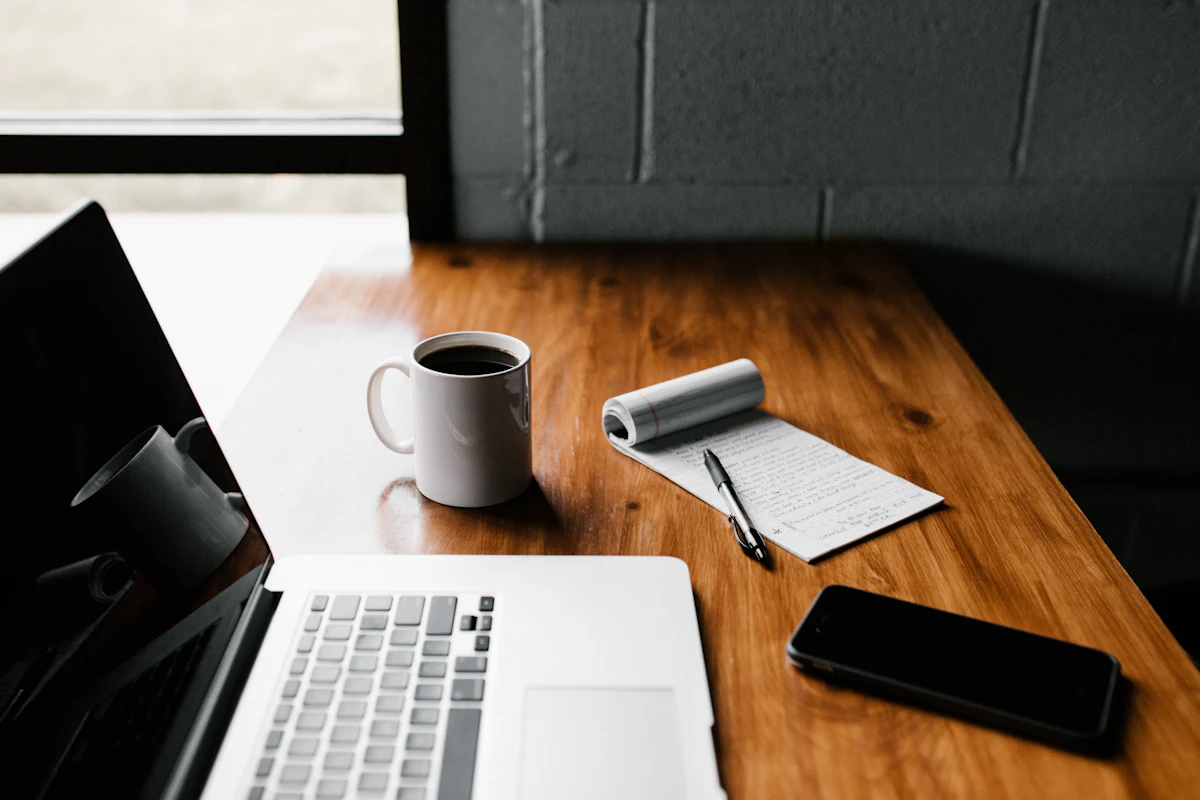
We live in a culture that worships busyness. Full calendars are worn as badges of honour. Packed to-do lists signal importance. The person who sleeps the least and works the most is celebrated as the most dedicated.
And yet some of the most productive, creative, and fulfilled people in the world are also some of the least busy. They have mastered something counter-intuitive — the art of doing less, better.
The Busyness Trap
Busyness and productivity are not the same thing. In fact, they are often opposites.
When your days are packed with meetings, notifications, and low value tasks, there is no space for deep thinking, creative work, or strategic decisions. You are always reacting, never creating. Always responding, never directing.
The result is a life that feels exhausting and important but produces surprisingly little of real value.
""It is not enough to be busy. The question is — what are we busy about? Most people are busy doing things that do not matter, while the things that matter go undone.""
The 80/20 Principle Applied to Life
The Pareto Principle — the idea that roughly 80 percent of results come from 20 percent of efforts — applies not just to business but to every area of life.
Twenty percent of your relationships bring 80 percent of your joy. Twenty percent of your work produces 80 percent of your results. Twenty percent of your habits drive 80 percent of your health and wellbeing.
The leverage question, then, is not how to do more. It is how to identify that 20 percent and ruthlessly eliminate everything else.
The Power of Essentialism
Essentialism is not about doing less for its own sake. It is about doing less so that you can do what matters more, better.
The essentialist asks a different question than the non-essentialist. Instead of "how can I fit this in?" they ask "is this the most important thing I could be doing with this time?" Instead of saying yes by default, they say no by default and yes only when something is truly essential.
This requires a tolerance for disappointing people in the short term — saying no to requests, declining invitations, stepping back from commitments that no longer serve. But it creates space for the things that genuinely matter.
Designing a Simpler Life
Simplicity does not happen by accident. It requires active design.
Start with your environment. Clutter in your physical space creates clutter in your mental space. A clean, organised, minimal environment reduces the cognitive load of daily life and creates the conditions for focus.
Then look at your commitments. What are you doing out of obligation rather than genuine value? What would happen if you stopped? Often the answer is — very little.
Finally, look at your digital life. The average person checks their phone over a hundred times a day. Every notification is a tiny interruption that fragments attention and prevents deep work. Ruthless curation of apps, notifications, and screen time is one of the highest leverage changes available.
Final thought
The most productive thing you can do is often nothing — nothing unimportant, that is. Create space, protect it fiercely, and fill it only with what truly matters. Simplicity is not a retreat from ambition. It is the most direct path to it.
Vinit Menon
founder · Verity
Tech enthusiast and system architect passionate about building scalable digital experiences and simplifying complex problems.
Discussion
0 comments

